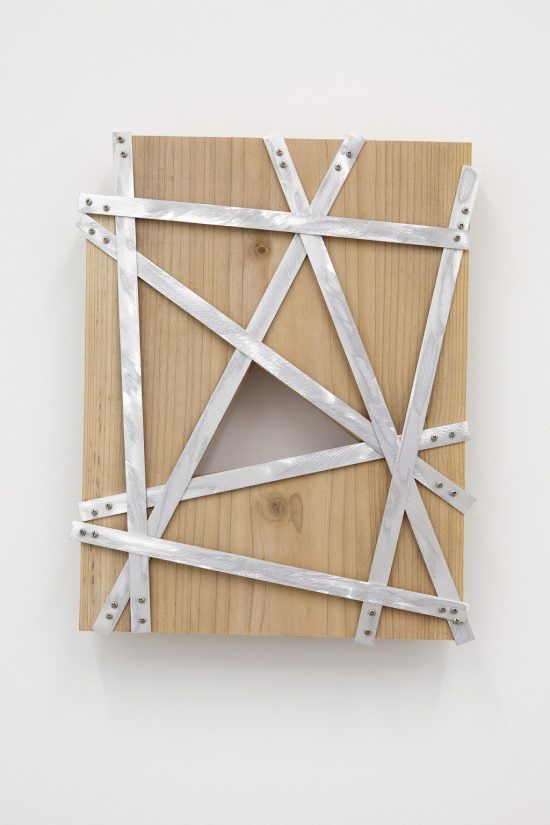
Excepciones/Normal Exceptions is an exhibition of contemporary art in Mexico that takes a particular approach. Rather than aiming to write a history of what has been a particularly fecund time for creative practices in Mexico, Normal Exceptions brings together works by artists who are actively investigating and challenging how history itself is written, pictured and narrated. Particular moments are examined through excavations, portraiture and transformations and recuperations of materials and documents. These make visible the lives and events of daily life. The technologies and systems in which history is recorded, from redundant memory devices such as vinyl records, archives, or handwoven computer memory, to the social exchanges in marketplaces, the media or mythology, are materials that focus on what has been omitted as much as what has been inscribed within them. Disruptions and interventions to these same systems generate further reflection on the agency of individuals in or against social, political and other institutional forces.
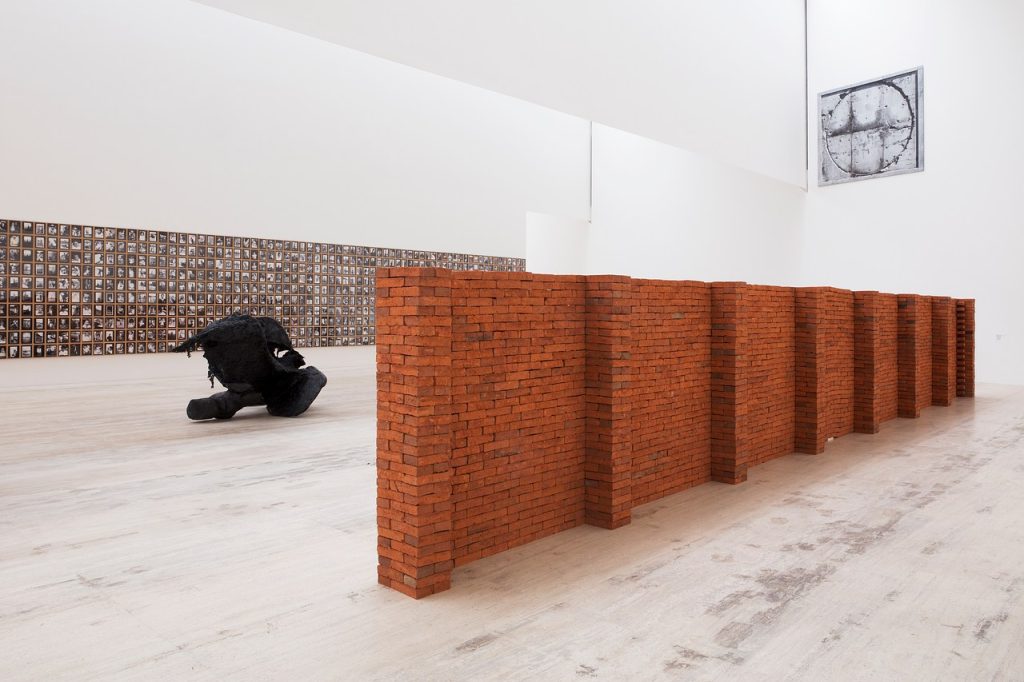
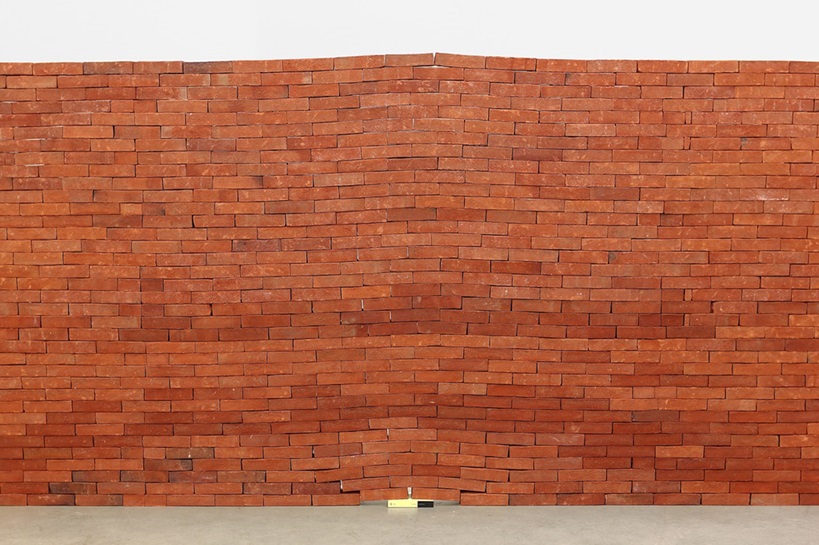
Many works engage with more than one of these areas. Pedro Reyes’s Disarm Clock II (2015-2021) is made from discarded gun parts and sounds each time an individual is killed by a gunshot worldwide. El castillo [The Castle] (2007) by Jorge Méndez Blake finds a copy of Kafka’s novel on the fraught encounter of its protagonist to the municipality disrupting the orderly arrangement of bricks in a wall. Teresa Margolles reclaims the steel from demolished buildings in Ciudad Juárez to make a 1-metric ton cube that commemorates the evicted and dispossessed under the name of urban renewal. Together, the works in Normal Exceptions provide a vista of personal and cultural moments in Mexico that form the living backdrop to what may, eventually, become abstracted to a history of our times, but remains vital in the present.
The title of the exhibition is borrowed from microhistory, a discipline that focuses on what life was like in a certain time. A counterpoint to traditional historical accounts that take an overview, microhistory offers narratives based around a singular, run-of-the-mill, and at the same time unusual event or person that reflect the experience of social conditions. While not following the precise methodology of microhistory, Normal Exceptions does adopt some of these aims and principles. The exhibition addresses the particular rather than the general. It includes overlooked practices, or areas of established artists’ practices, that have been important yet peripheral to the main critical and artistic discussions. The works speak of the presence of people and their actions within systems of authority and officialdom, each seen as a point of contestation to the broad brushstrokes of grand history by telling stories that might otherwise be overlooked.
The term ‘exception’ has its etymology in the Latin excipere meaning ‘to take out’. Taken literally, in relation to the works in this exhibition it suggests how the majority of people and events are deemed insignificant to history, and therefore removed from the official annals. Rather than the great figures and major turning points, the works in this exhibition recognize the minor ones. Nevertheless, they are meaningful to how a time and those that live it are understood, the normal state of affairs, the interactions between people on a day-to-day basis, and how they are recorded (and later forgotten) in the records of the authorities.
In the museums project gallery, two solo presentations provide almost microscopic studies where hard and social sciences are intertwined. Jorge Satorre’s Los negros [The Blacks] (2011) is a body of work that follows the methods of microhistory in a series of works that weave together seemingly disparate observations of people and art in a city. Tania Candiani’s La Restauradora [The Restorer] (2020) is a video retracing the story of a location in the Historic Center through the history of pigments and their technical development.
There is irony in the exhibition’s endeavor. Inevitably, by selecting and presenting the artists and their works at the museum grants them a certain historical status, including the excluded. With this in mind, a certain agitation of what it means to curate an exhibition forms part of Normal Exceptions, resisting a singular authorial voice. To this end the exhibition is not a static one. Apart from the galleries, a series of projects that acknowledge the role of institutions as well as artists bring external voices into play.
Three further projects taking place on the first-floor gallery invite organizations rather than artists to collaborate with the museum. SOMA, ZsONAMACO and INSITE have each played an influential role in the formation of Mexico’s artistic foundations in different respects. As an independent, artist-for-artists space, SOMA has provided an invaluable point of contact between generations of artists through its studio study, public talks, and residency programs. For Normal Exceptions they present a series of workshops in which the participants and hosts work together to produce artistic research that reflects on the landscape of the area around the museum. The largest art fair in Latin American, ZsONAMACO, has established Mexico as a center in the international art market. Working with the current Artistic Director, Juan Canela, artist duo Rometti Costales present Aires acondicionados [Air Conditioners] (2021) that establishes an orchestrated series of events—from the movement of the sun entering the building, to meditation sessions for the museum staff, and a tour of the museum’s infrastructure. INSITE has worked in various contexts where artists engage with the public and public space that have included a cross-border arts project in Tijuana and San Diego, a residency program in Mexico City and most recently a journal, edited by the current curator Andrea Torreblanca. Working with their own archives, Torreblanca has conceived a play entitled Speech Acts using quotations from many of their contributors over the years, to be staged in a scenography designed by architects Productora.
Now in its 20th year, it is also significant that the Colección Jumex itself is part of the ecology of contemporary art in Mexico alongside these peers. The works in this exhibition include many that have entered the collection over the years, yet have been infrequently seen, alongside new and loaned works from invited artists. As part of its ongoing mission to bring contemporary art to the Mexican public, Normal Exceptions also initiates a series of video interviews with artists for the Museo Jumex website and a series of podcasts. Together these provide a first-hand account of life in and around contemporary art. In keeping with the exhibition, the focus is on the individual rather than on defining a movement.
Microhistory is a fairly recent development within the discipline of social history, rooted in the writings of the Italian historians Carlo Ginzburg, Edoardo Grendi and Giovanni Levi which gained popularity in the 1970s. In Mexico, microhistory has become known through Luis González’s Pueblo en vilo. Microhistoria de San José de Gracia from 1968, credited as an early example, although it remains a contested reference. For this exhibition, the term “normal exception,’’ understood as individual cases that stand out because they reveal new information, becomes the guiding principle for the selection of works that focus on the study of small units to reflect on a larger whole.
Normal Exceptions includes artworks that operate in context. Although each work is undoubtedly specific and carries an almost literary story, they equally contain unspoken truths about Mexican culture, art in general, and the issues surrounding the legibility of artistic trends locally and internationally. Through their works, the artists narrate events that are representative of a cultural and social environment in its particularities. In a sense, the works can be read as biographies of the artists, their local scenes, and the characters and situations that generated their production. By foregrounding the methods of microhistory that map out relationships and allow sources to speak for themselves, Normal Exceptions also challenges the traditional art historical approach.
The genre of portraiture is questioned in works that confront the likeness of patrons, friends, and family members with stereotyped visualizations of the individual, broad ideas on the history of the photographic medium, or their own changing faces. Daniela Rossell’s Ricas y Famosas [Rich and Famous] series (2000-2002) is a notorious example where femininity, power, and wealth are merged in a disturbing, if consistent, form of portraiture. Some recognizable faces of artists and other figures in the Mexican cultural scene appear in Lake Verea’s Vanidoscopio [Vanityscope] (2007-ongoing), an archive of candid yet formal black and white portraits done in the artists’ professional studio. On the other hand, the portrait of a single man and several of his family members appear over the years in the 990 images that make up Iñaki Bonillas’s Todas las fotografías verticales de los Archivos J. R. Plaza, documentadas fotográficamente [All the Vertical Photographs of the J. R. Plaza Archive, Photographically Documented] (2004). In these and other works, portraiture becomes more a visual repertoire of cultural practices and shared references than a picture of someone while retaining the sense of a personal account.
Contemporary artists are frequently conscious of how the objects they produce remain bound to an exchange system, and equally create images or ghosts that resist easy circulation or categorization. Such works trace or serve as evidence for a process of historical reconstruction through recounting the lives of individuals or shedding light on particular events and often require fieldwork and intensive research from the artists.
Tania Ximena and Yollotl Alvarado have spent over five years conversing with the Zoque residents of Esquipulas Guayabal, a town in northern Chiapas, who have shared stories of the eruption of the Chichón volcano that destroyed and displaced the village in 1982. Their collaborative works reflect the long aftermath of this disaster. In Exhumación [Exhumation] (2017-2021), a work produced for Normal Exceptions, they assembled a structure that echoes the fragments of the unearthed church in the village. Rather than a mimetic reconstruction, the installation is an absent space embedded in the gallery. The work excavates a documented history of a major event that remains unknown to many Mexicans.
This work is contrasted with G.T. Pellizzi’s Allora, Baldessari, Bo Bardi, Calzadilla, Fischli, Kelley, Raad, Twombly, Vo, Walther, Warhol, Weiss (2021), a gesture of removing the museum white walls in the specific places where works have hung in previous exhibitions. Here, the institution of the museum is examined and its ongoing legacy investigated, by literally and metaphorically exposing the structure that supports it.
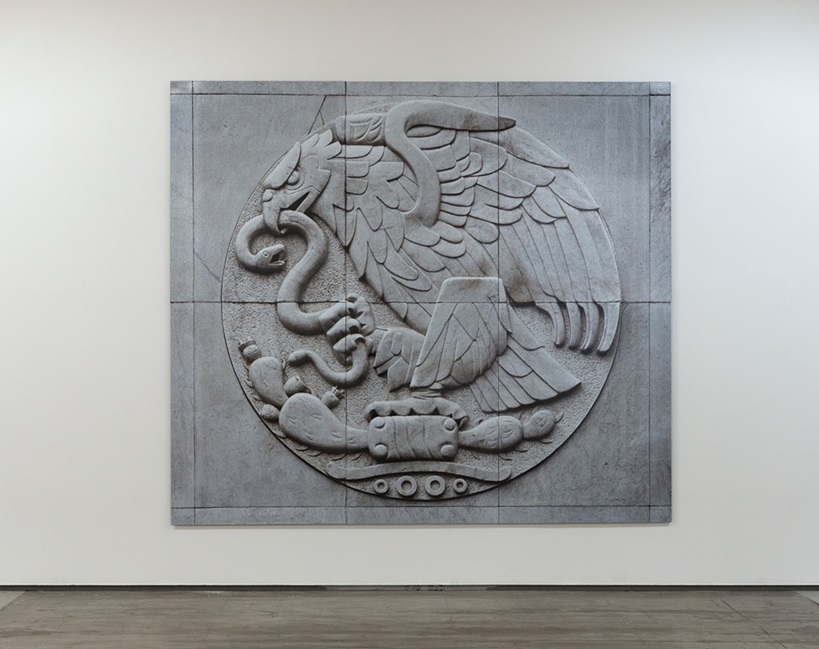
The collective Tercerunquinto look back at the Tlatelolco massacre of 1968, an event that precipitated a shift in the artistic and cultural community in Mexico. In Desmantelamiento y reinstalación del escudo nacional [Dismantling and Relocation of the National Emblem] (2008), they temporarily removed the national emblem from the façade of the former Ministry of Foreign Affairs building. During 24 hours on October 2, 2008, the building was shown with a physical and symbolic emptiness. The documentation of this event is shown in the gallery, by two large photographs hung above eye level and a video that provides a narrative account of the action.
Laureana Toledo’s video Febrero [February] (2005) also documents a specific period of time. The artist recorded the movement of the sun throughout a day as reflected on the exterior of the Miguel Alemán apartment complex. The windows open and close as the residents go about their daily routines, but each offers a glimpse of an individual, even in the conspicuous monotony of the building’s architecture.
The underpinnings of authority are explored by several artists in the exhibition as an invisible power that exposes our own notion of self. In a video, Miguel Calderón uncovers the story of a falconer who was accused of drunk driving by the pet parrot he transported. And Damián Ontiveros Ramírez held a drawing workshop with police officers who produced telling images of their weapons.
But authority also implies a system of exchange, whereby some are assured safety or stability by complying with certain norms. Miguel Fernández de Castro disrupts our confidence in this system by making visible the interaction between legality and illegality. For his participation in an exhibition in Tucson, Arizona, the artist sent a found brick from an abandoned brickyard to the museum via a smuggler in Sonora. The gesture reveals the history of how Mexican-made bricks were exported for use in the American construction industry until they were replaced by cheaper or locally made materials. The Brick [El ladrillo] (2007), simply bears witness to the former and current routes of exchange.
Other artists investigate the specific qualities of objects and materials and their capacity to be recuperated or transformed. Lorena Ancona’s Rain Breath (2021), is a hanging ceramic sculpture with further elements mounted on the adjacent walls. The artist has been conducting research on the material qualities of pigments and clays in the Yucatán region, where she is from and is currently based. Her ongoing archive continues to grow and enrich her practice, while providing her with the knowledge and tools to develop a sustainable practice.
Tania Pérez Córdova presents a series of works made from melting and recasting aluminum or steel objects such as a Dutch pot, an aluminum sink, or a steel bell back into their original form. With this process, some of the original material is lost, but the copy acquires a layered potency, as they become distorsions of the original.
The narrative developed throughout the exhibition is neither chronological nor linear, but instead zooms in and out, from the smallest individual unit to the local, the national, and finally the international scale. Artists working in or from Mexico are constantly making the leap from the micro, local, and individual onto the macro and global. It is perhaps this capacity to adapt and reconfigure genealogies which has allowed Mexican artists to engage with a broader system that once excluded or exoticized their production.
The past twenty-five years have borne witness to an increasingly connected, globalized and seemingly hegemonized world. The quick and selectively easy mobility of people and products, the digitization of knowledge and communication, and continuously expanding economic ties have acted as driving forces that join and separate in equal measure. Thus, making a comprehensive history impossible, for it is rather the microhistories, focused on specific spaces, times, events or individuals that can reveal the truths about life in a particular moment or place.
Mexico boasts a legacy of artists creating a context for themselves outside the institution and in reaction against market forces. Los Grupos, a diverse assemblage of art collectives, emerged in Mexico in the late 70s and early 80s. Employing public space as a playground, and the urban landscape as material to be appropriated, they generated new kinds of exchanges with their audience and left behind a lasting influence that contemporary artists employ by exploring new or different ways of presenting their work. Using public place as “site” and productive material, they break from established hierarchies of art.
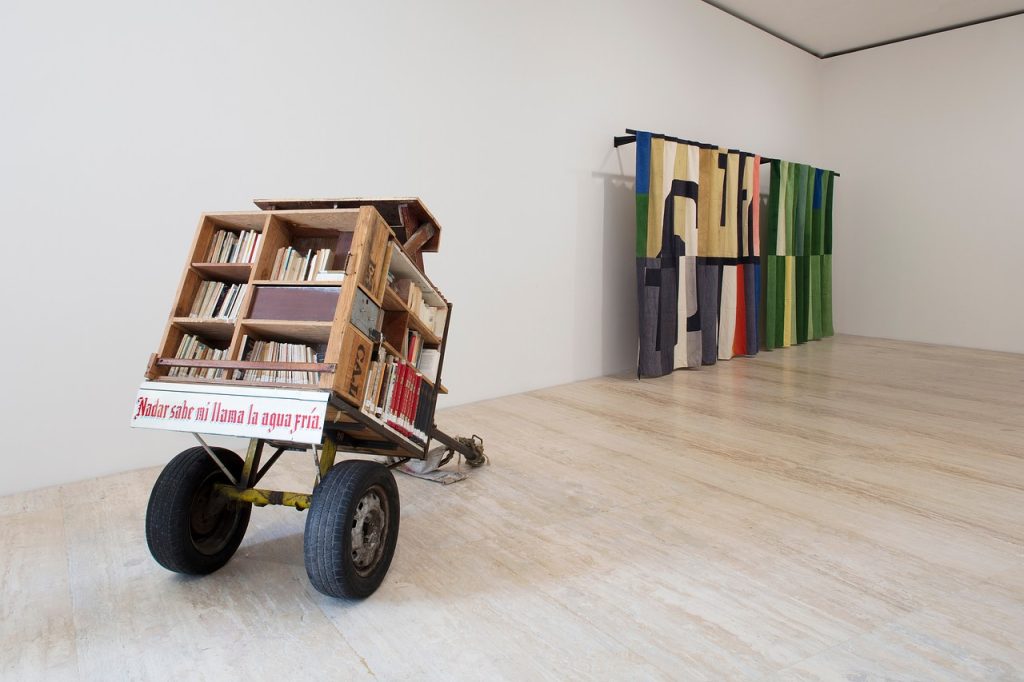
Stefan Brüggemann and Pia Camil both engage with the public landscape through pieces that borrow visually and conceptually from it. Camil appropriated signs and symbols culled from billboards in Espectacular Telón Pachuca I y II [Pachuca Billboard Curtain I and II] (2014). Integrating them into this set of hand-dyed and stitched canvas curtains. The work engages with the idea of decelerating the process of mass cultural production and consumption through handmade craft. Brüggemann’s Conceptual Decoration Silver and Black Wallpaper (2008) might be understood within the legacy of Mexican Muralism. The artist appropriates and displaces the social role of public mural commissions intended as unifying of a national identity, by employing text and repetition to ironically question the works’ place on the wall as anything other than decorative.
Abraham Cruzvillegas employs found objects from the public sphere to engage with themes of exchange, landscape and human residue in Haussmannian Leftovers: Richard Lenoir (2007). Consisting of wooden fruit and vegetable crates that litter the streets around the Richard Lenoir street market in Paris.
Cruzvillegas transforms surplus functional objects of a market economy into symbolic carriers of meaning.
Public interventions and actions, as well as artworks that borrow from the landscape, influence and are influenced by the systems of exchange that sustain the market driven, capitalist globalism through which things accrue value. Various types of markets and economies make up the capitalist system, each following its own rules of engagement and each recording in some way or other the interactions and exchanges that occur within it. An exponential number of representations are left behind.
Ale de la Puente’s untitled installation of coins scattered across the floor, and accompanied by a broom and pan ready to scoop them up, forces a confrontation with the value of money and the ways in which we earn and trade it for goods. The four laboriously hand woven Gobelins that make up Gabriel Kuri’s Gobelino políptico franja magenta (aeropuerto) [Magenta stripe polyptych gobelin tapestry (airport)] (2008) highlight the residue of human interactions through the time-consuming reproduction of a disposable, everyday receipt. Both the coins and receipts become symbols for interactions that define consumer culture.
Touching on the ways in which the art world engages with economic systems, Mario García Torres investigates and at times even helps locate missing pieces from Ed Ruscha’s catalog in This Painting is Missing / This Painting Has Been Found (2006-ongoing). Canvases representing each vanished Ed Ruscha artwork are placed on opposing walls depending on whether they have been located or continue lost. Torres’ work reassesses art history, while Eduardo Abaroa approaches anthropological history in his Inserciones arqueológicas [Archeological Insertions] (2012-2013). By employing the black market as a site for the purchase of pre-Columbian objects that are then left in the storage lockers at the Museo Nacional de Antropología in Mexico City, each questions how and why certain objects are elevated to museum worthy relics, while others are not. These artists engage with memory and markets, exchange and archiving in equal measure; questioning the ways in which markets uphold and collapse systems of recording memory and archiving an authoritative history.
History has a way of being recorded, despite the fact that it is often embellished, redacted, or altogether changed in the final accounting of history. This manner of creating, telling, and narrating has allowed for the formation and prevalence of hegemonic regimes of visuality, temporality, and spatiality.
Regimes that are examined and contested by artists through confrontations with the forgotten, discarded or unacknowledged. Artists who, by shying away from institutional attempts at archiving, explore memory as subjective, tied to interpretation, locality, and context.
Diego Pérez García upends the idea of a library as an official repository of knowledge in Biblioteca de Nezahualcóyotl [Nezahualcóyotl Library] (2004- 2006). Through a process of recovering books from the garbage or purchasing them from street vendors, and then making them available from a cart pulled by donkey, Pérez García created a traveling public library that he drove out into the Nezahualcóyotl municipality of Estado de México in an attempt to decentralize knowledge and provide greater access by way of breaking down the institutionalized archive through an encounter with public space in an economically disadvantaged neighborhood.
Chantal Peñalosa’s Afterlife (2019) series focuses on specific histories that have already been recorded, offering a different mode of access through retrospective reframing. Peñalosa sought to reactivate portions of the border landscape, by inserting images of works from the INSITE archive back into their original locations near Tijuana, San Diego, Rosarito, etc. As ghosts of public artworks, she brings new meaning to their enduring if ephemeral legacies. Circe Irasema transforms the art historical canon by engaging with the matchboxes produced by the Central Cerillera, which originally depicted pieces from Western art history. In her series Nuevos Clásicos [New Classics] (2016 – ongoing), Irasema presents an alternative cultural and artistic legacy, by imitating the matchbox form but instead depicting modern and contemporary creations by Mexican artists.
Ximena Garrido-Lecca’s Módulo de memoria: H316 [Memory Module: H316] (2021) takes its design from magnetic-core memory, a form of computer memory that consisted of ferrite rings or cores held together in a grid structure by woven wires. These devices were assembled by and large in garment factories and by female factory workers. Garrido Lecca explores the relationship of handweaving to technology, exalting women’s contribution to the making of memory and encoding of knowledge within the computing industry and undermining the heroic male narrative of technological advancement.
Through such disjunctions and contradictions, and by playing out counter-narratives to dominant hegemonies, the artists in Normal Exceptions offer different visions of resistance. They stand in opposition to universalizing and totalizing narratives of capitalism, progress and linear historicity through multi and interdisciplinary approaches that refuse to participate in “traditional” modes of encountering, seeing and understanding.
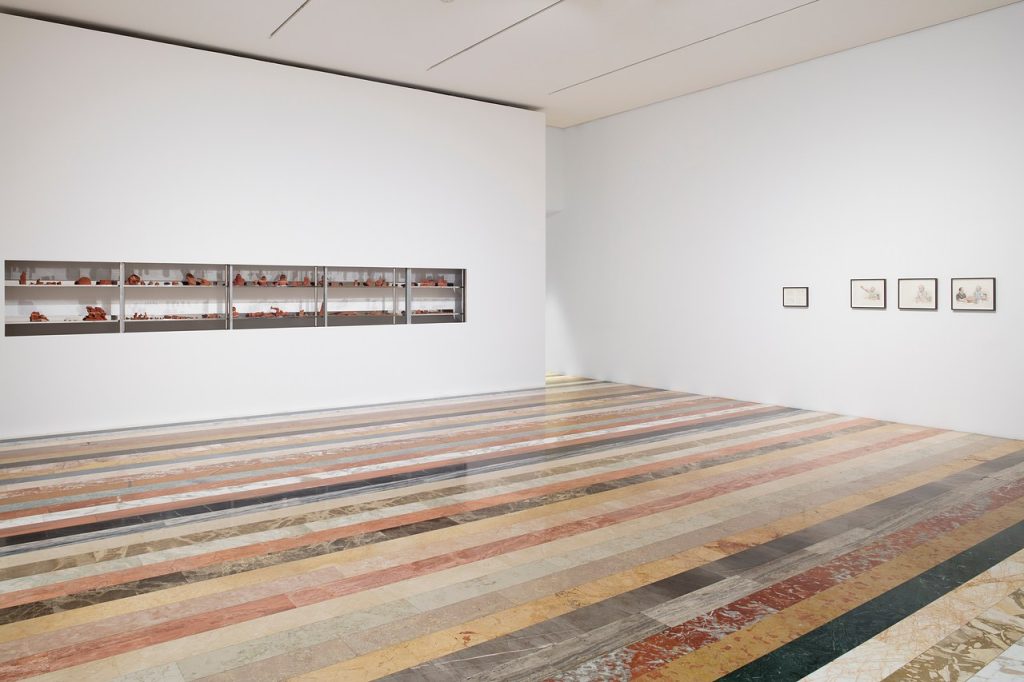

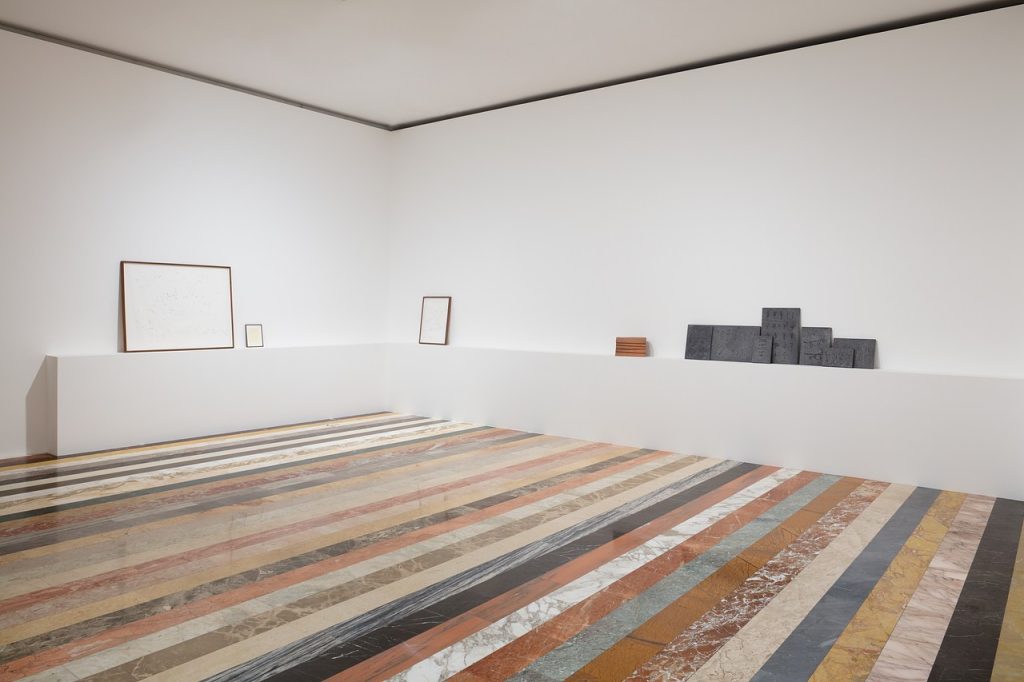








Artists: Eduardo Abaroa, Julieta Aguinaco, Tania Ximena y Yollotl Alvarado, Francis Alÿs, Lorena Ancona, Raúl Ortega Ayala, Marcelino Barsi, Jorge Mendez Blake, Iñaki Bonillas, Stefan Brüggemann, Miguel Calderón, Pia Camil, Tania Candiani, Miguel Fernandez de Castro, El Chino, Virginia Colwell, Abraham Cruzvillegas, Tania Pérez Córdova, Zhivago Duncan, Jose Dávila, Diego Pérez García, Ximena Garrido-Lecca, Daniel Guzman, Circe Irasema, Gabriel Kuri, Ilán Lieberman, Teresa Margolles, Leo Marz, Yoshua Okón, Gabriel Orozco, Damián Ortega, G.T. Pellizzi, Chantal Peñalosa, Elisa Pinto, Ale de la Puente, Damián Ontiveros Ramírez, Pedro Reyes, Daniela Rossell, Jorge Satorre, Ana Segovia, Melanie Smith, Tercerunquinto, Laureana Toledo, Mario García Torres, Lake Verea
Title: Normal Exceptions
Venue: Museo Jumex, Mexico City
Curated by: Kit Hammonds
Dates: March 27 – August 15, 2021